
Phrasebook
![en]() At the train station »
At the train station »
![ur]() اسٹیشن پر
اسٹیشن پر
 At the train station »
 اسٹیشن پر
-
 EN
English (US)
EN
English (US)
-
 AR
Arabic
AR
Arabic
-
 DE
German
DE
German
-
EN
English (US)
-
EN
English (UK)
-
 ES
Spanish
ES
Spanish
-
 FR
French
FR
French
-
 IT
Italian
IT
Italian
-
 JA
Japanese
JA
Japanese
-
 PT
Portuguese (PT)
PT
Portuguese (PT)
-
 PT
Portuguese (BR)
PT
Portuguese (BR)
-
 ZH
Chinese (Simplified)
ZH
Chinese (Simplified)
-
 AD
Adyghe
AD
Adyghe
-
 AF
Afrikaans
AF
Afrikaans
-
 AM
Amharic
AM
Amharic
-
 BE
Belarusian
BE
Belarusian
-
 BG
Bulgarian
BG
Bulgarian
-
 BN
Bengali
BN
Bengali
-
 BS
Bosnian
BS
Bosnian
-
 CA
Catalan
CA
Catalan
-
 CS
Czech
CS
Czech
-
 DA
Danish
DA
Danish
-
 EL
Greek
EL
Greek
-
 EO
Esperanto
EO
Esperanto
-
 ET
Estonian
ET
Estonian
-
 FA
Persian
FA
Persian
-
 FI
Finnish
FI
Finnish
-
 HE
Hebrew
HE
Hebrew
-
 HI
Hindi
HI
Hindi
-
 HR
Croatian
HR
Croatian
-
 HU
Hungarian
HU
Hungarian
-
 HY
Armenian
HY
Armenian
-
 ID
Indonesian
ID
Indonesian
-
 KA
Georgian
KA
Georgian
-
 KK
Kazakh
KK
Kazakh
-
 KN
Kannada
KN
Kannada
-
 KO
Korean
KO
Korean
-
 KU
Kurdish (Kurmanji)
KU
Kurdish (Kurmanji)
-
 KY
Kyrgyz
KY
Kyrgyz
-
 LT
Lithuanian
LT
Lithuanian
-
 LV
Latvian
LV
Latvian
-
 MK
Macedonian
MK
Macedonian
-
 MR
Marathi
MR
Marathi
-
 NL
Dutch
NL
Dutch
-
 NN
Nynorsk
NN
Nynorsk
-
 NO
Norwegian
NO
Norwegian
-
 PA
Punjabi
PA
Punjabi
-
 PL
Polish
PL
Polish
-
 RO
Romanian
RO
Romanian
-
 RU
Russian
RU
Russian
-
 SK
Slovak
SK
Slovak
-
 SL
Slovenian
SL
Slovenian
-
 SQ
Albanian
SQ
Albanian
-
 SR
Serbian
SR
Serbian
-
 SV
Swedish
SV
Swedish
-
 TA
Tamil
TA
Tamil
-
 TE
Telugu
TE
Telugu
-
 TH
Thai
TH
Thai
-
 TI
Tigrinya
TI
Tigrinya
-
 TL
Tagalog
TL
Tagalog
-
 TR
Turkish
TR
Turkish
-
 UK
Ukrainian
UK
Ukrainian
-
 VI
Vietnamese
VI
Vietnamese
-
-
 UR
Urdu
UR
Urdu
-
AR
Arabic
-
DE
German
-
ES
Spanish
-
FR
French
-
IT
Italian
-
JA
Japanese
-
PT
Portuguese (PT)
-
PT
Portuguese (BR)
-
ZH
Chinese (Simplified)
-
AD
Adyghe
-
AF
Afrikaans
-
AM
Amharic
-
BE
Belarusian
-
BG
Bulgarian
-
BN
Bengali
-
BS
Bosnian
-
CA
Catalan
-
CS
Czech
-
DA
Danish
-
EL
Greek
-
EO
Esperanto
-
ET
Estonian
-
FA
Persian
-
FI
Finnish
-
HE
Hebrew
-
HI
Hindi
-
HR
Croatian
-
HU
Hungarian
-
HY
Armenian
-
ID
Indonesian
-
KA
Georgian
-
KK
Kazakh
-
KN
Kannada
-
KO
Korean
-
KU
Kurdish (Kurmanji)
-
KY
Kyrgyz
-
LT
Lithuanian
-
LV
Latvian
-
MK
Macedonian
-
MR
Marathi
-
NL
Dutch
-
NN
Nynorsk
-
NO
Norwegian
-
PA
Punjabi
-
PL
Polish
-
RO
Romanian
-
RU
Russian
-
SK
Slovak
-
SL
Slovenian
-
SQ
Albanian
-
SR
Serbian
-
SV
Swedish
-
TA
Tamil
-
TE
Telugu
-
TH
Thai
-
TI
Tigrinya
-
TL
Tagalog
-
TR
Turkish
-
UK
Ukrainian
-
UR
Urdu
-
VI
Vietnamese
-
33 [thirty-three]
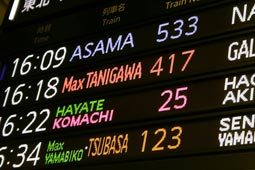
At the train station


Choose how you want to see the translation:
Language change
The world in which we live changes every day. As a result, our language can never stagnate. It continues to develop with us and is therefore dynamic. This change can affect all areas of a language. That is to say, it can apply to various aspects. Phonological change affects the sound system of a language. With semantic change, the meaning of words change. Lexical change involves changes to vocabulary. Grammatical change alters grammatical structures. The reasons for linguistic change are varied. Often economic reasons exist. Speakers or writers want to save time or effort. Such being the case, they simplify their speech. Innovations can also promote language change. That is the case, for instance, when new things are invented. These things need names, so new words emerge. Language change is typically not planned. It is a natural process and often happens automatically. But speakers can also vary their language quite consciously. They do so when they want to achieve a certain effect. The influence of foreign languages also promotes language change. This becomes particularly obvious in times of globalization. The English language influences other languages more than any other. You can find English words in almost every language. They are called Anglicisms. Language change has been criticized or feared since ancient times. At the same time, language change is a positive sign. Because it proves: Our language is alive – just like us!
Did you know?
Persian belongs to the Iranian language family. It is primarily spoken in Iran, Afghanistan and Tajikistan. It is important in other countries too, however. Among them are Uzbekistan, Turkmenistan, Bahrain, Iraq and India. Persian is the native language of approximately 70 million people. An additional 50 million people speak it as a second language. Different dialects are spoken depending on the region. In Iran, the Teheran dialect is considered the standard spoken language. In addition, the official written language of Persian also has to be learned. The Persian semiotic system is a variation of the Arabic alphabet. Persian contains no noun markers. There are also no grammatical genders. In the past Persian was the most important common language of the Orient. When you study Persian you quickly discover a fascinating culture. And Persian literature is among the most significant literary traditions in the world.
Persian belongs to the Iranian language family. It is primarily spoken in Iran, Afghanistan and Tajikistan. It is important in other countries too, however. Among them are Uzbekistan, Turkmenistan, Bahrain, Iraq and India. Persian is the native language of approximately 70 million people. An additional 50 million people speak it as a second language. Different dialects are spoken depending on the region. In Iran, the Teheran dialect is considered the standard spoken language. In addition, the official written language of Persian also has to be learned. The Persian semiotic system is a variation of the Arabic alphabet. Persian contains no noun markers. There are also no grammatical genders. In the past Persian was the most important common language of the Orient. When you study Persian you quickly discover a fascinating culture. And Persian literature is among the most significant literary traditions in the world.